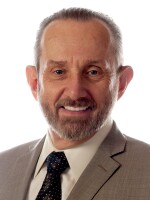
Welcome to Straight Talk on Health. I’m your host Dr. Chet Zelasko. Straight Talk on Health is a joint production with WGVU in Grand Rapids MI. I examine the practical application of health information. Nutrition. Exercise. Diet. Supplementation. I look at the science behind them, and let you know whether it’s something to consider or not. You can check out other things that I do on my website Drchet.com and sign up for my free emails.
When last we spoke, I was facing surgery to have cataracts removed from both eyes, lens replaced, as well as drains put in both eyes. The surgeries were a couple of weeks apart. I typed this script without glasses in a 12 point Arial font and I could actually read what I was typing. Four months ago, that would never have happened because both my long distance vision and short distance vision was clouded by cataracts and glaucoma damage. I’ve always used myself as an example when appropriate when I talk about health. This is no different.
Let me recap my vision story for you. My dad died when he was 41, so I have no information from him or his family. To my knowledge, he never wore glasses. My maternal grandmother had cataracts removed when she was about 70. I have to say that it led to a serious decline in her mental health; she never could get used to the glasses with thick lenses that looked like the bottom of soda bottles. Remember, the type of lens replacement we have today didn’t become common until the mid-1980s. They did the cataract surgery in a hospital where she had to stay overnight. She expected to wake up seeing clearly. When that didn’t happen, it exaggerated her decline although she lived another 10 years and passed at 80 years old. My maternal grandfather did wear glasses but cataracts didn’t happen yet when he died at 73 years old.
My mother had been diagnosed with glaucoma. I don’t remember anything special at that time, not even eye drops used to control the ocular pressure we have today. She died from lung cancer at 61 years old after smoking for over 40 years. The important thing is that she carried the genetic tendency for glaucoma which was the genetic factor in my development of glaucoma. That’s my genetic background.
How about vision? I still remember the exact moment I discovered I needed reading glasses. When I was a college professor at a college in Buffalo NY, I had been given a badge to enter campus during an international sport competition being held on campus. I couldn’t read the fine print on the badge no matter how hard I tried. It was at that point I began getting prescription reading glasses although to be honest, I went through the type you buy in a pharmacy to have enough pairs to leave where I needed them.
My real journey began when I finally had an eye exam about 10 years ago here in Grand Rapids. I needed new glasses as it seemed each eye needed a different strength prescription. The optometrist tested me for glaucoma and the numbers were high—over 30 in each eye, and it should be below 8. Prescription eye drops lowered the pressure, but they can’t repair the damage I have in my right eye. That was the reason for different prescription in each eye. I was also referred to an ophthalmologist to monitor cataracts that were just beginning to develop.
The cataracts developed over a period of 7-8 years and by my last exam, we decided to take care of replacing the lenses. I was happy to do it because as I said, reading had become a real challenge. Cataract surgery would take care of my distant vision. But neither the cataract surgery nor the drains they installed to replace the eye drops can repair the vision lost due to the glaucoma. I consider myself lucky it wasn’t more severe. I had both cataracts removed two weeks apart and have been recovering since.
As for my vision about a month after the surgical replacements? I would say it’s excellent—as long it’s more than 18 inches away. I look forward to seeing everyone clearly without any assistance down the road. As I said, I typed and read this script without glasses in a 12-point font. I still need glasses for reading to help the eye with the lost vision, but that seems a relatively low price to pay.
The questions I have are: what could I have done to prevent either condition? And what should you and I do in the future?
Glaucoma is not just a single ocular disease; there are several types. Some are related to how well the eyes drain fluid; some drain slowly while others seem to get plugged. The key to limiting damage is to get the pressure down by draining excess fluid. While there are still more types of glaucoma, the important thing is to know your family history. That’s a significant risk factor for developing glaucoma. There’s genetic testing available, but it’s not always predictive of what will happen to an individual, because some forms of glaucoma are caused by a combination of genetic factors.
Regular ocular pressure tests are the best way to find out whether the pressure in the eye is normal or not. If I had not gone in to get new glasses, I would not have gotten a diagnosis until later and may have lost even more vision.
As for cataracts, there’s really nothing you can do to prevent cataracts because it’s partially a function of aging. However, you can protect your eyes by wearing UV protection sunglasses to reduce the impact of sunlight; it’s always better the earlier you start, so keep that in mind with the kids and grandkids. Other steps we can take are to quit smoking and keep blood sugar under control.
Two questions I’ve gotten about the surgery are about the types of lenses and the cost. I got the simplest mono-focal intraocular lenses because my distant vision was my primary concern. The glaucoma created the need for reading glasses to balance both eyes.
If you’ve always worn corrective lenses, those issues can be addressed depending on the type of lenses used. The person who knows that best would be your ophthalmologist. The cost will vary depending on what you want the lens to do. It also depends on the type of health insurance coverage you have. The American Academy of Ophthalmology has a Q&A section on lenses on their website. It’s obvious to me that eyecare is a good investment because it affects your quality of life and productivity.
I asked my surgeon, who BTW has listened to this podcast at times,the question about how to prevent cataracts and glaucoma. He thought about it and said prevention can be tenuous, so the best thing to do, to keep your vision as long as you can, is to get regular eye exams every year; that will protect your vision as well as keeping your glasses up to date to reduce eye strain. That seems like sound advice to me. Just another step to improve our health span. I’m glad I had the surgery and would recommend it without reservation but it’s discussion best had between you and your ophthalmologist.
Speaking of that term, healthspan, that’s going to be the focus of this season. I’m certainly not the first to use it and I heard it during one of the health-related podcasts I listen to regularly. The basic idea is not how many years you live; it’s about how many years you live healthy. Some medical professionals have determined based on observation that once you’re diagnosed with a condition such as CVD or hypertension, the countdown clock begins. After that, a continual decline in healthspan. You may still have long life span but it will not necessarily be a healthy journey until you die. It comes down to a relatively simple question: what kind of life would you like to have? One that allows you to do anything you physically and mentally want to do or do you want to be encumbered by degenerative disease that limits you? There are many things we can’t control like exposure to viruses and environmental toxins and some genetic conditions. But with better lifestyle choices, we may be able to extend our healthspan. That’s going to be the focus of this season. Like the saying from Star Trek stating space was the final frontier, your healthspan is the frontier we all need to explore. Stick around for the ride.
That’s all the time I have for this episode. If you like this podcast, please hit the share button and tell your friends and colleagues about it. Until next time, this is Dr. Chet Zelasko saying health is a choice. Choose wisely today and every day.