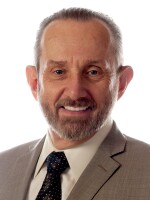
Welcome to Straight Talk on Health. I’m your host Dr. Chet Zelasko. Straight Talk on Health is a joint production with WGVU in Grand Rapids MI. I examine the practical application of health information. Nutrition. Exercise. Diet. Supplementation. I look at the science behind them, and let you know whether it’s something to consider or not. You can check out other things that I do on my website Drchet.com and sign up for my free emails.
We’ve entered the time of year when society focuses on health. It may be the new year but it could happen during any season. Or maybe it’s just the day you decide to take control of those things you can control and start to get stronger, leaner, and more flexible. Or it could be you want to reduce a reliance on medications and see if you can do better controlling your BP or pre-diabetes with a better lifestyle. Whatever the reason, there are programs available to help you achieve those goals. Some are free but most are not. How do you know what to choose because the testimonials all sound great.
I’ll simplify things for you in this podcast. I’ll give you what to do with brief guidance on how to do it. You’ve heard me use the words often: eat better. Eat less. Move more. I’ll expand on those to help you get started. The concepts are simple, the how gives you a direction, but the day to day is your choice as to how it fits your lifestyle. Let’s get going with the first: Eat Better
What does that mean? Try to eat the foods that provide the nutrients for your body to operate at an optimal level. I’ll give you a few things you should add to your diet if you don’t eat them at least several times per week.
Let’s start with vegetables. Specifically, two categories of vegetables that can help the liver detoxify the body. Is this a detox program? Well, you don’t have to go to a sweat lodge or drink only green tea for a week or anything like that. You just add servings of cruciferous vegetables and allium vegetables to your diet on a regular basis—preferably every day. I would wager that the first thought in your head is broccoli. That’s one of the dozens of cruciferous choices that range from arugula to watercress and everything in between. Allium vegetables are onions and garlic as well as leeks, green onions, chives, and shallots. Those two classes help the liver detoxify itself in a natural way to get rid of toxins and medication residues.
I think there is an aversion to those vegetables because we associate them with negative experiences. Gray broccoli instead of bright green and drenched in some kind of grainy cheese sauce? You heard it here: no one ever said these vegetables have to taste bad. Some examples? How about Cole slaw? Creamy or made with vinegar, that is easy to fit in a daily eating plan. How about adding Napa cabbage chopped up to your regular iceberg lettuce salad with some chives added? Like greens like collard greens? Cook them like always with the ham hocks, onions, and the bacon. You still get the benefit of both categories of vegetables. I could go on but I’ll move on.
Eat more fruit every day. Apples, pears and bananas if you like them but also berries of all types and citrus fruit as well. Those give you antioxidants and phytonutrients.
Finally, most people, especially over 40, would benefit from additional protein intake from animal or plant sources. The reasons are complex as are the calculations to determine a precise goal of grams of protein to eat per day. To keep it simple, take 2/3s of your body weight in pounds and use that number for the grams of protein you should eat every day. If someone weighs 200 lbs, that means they should eat about 130 grams of protein per day. Just remember that the protein counts from all sources.
Next up: Eat Less. This is probably the simplest recommendation but it is the most difficult to execute. I know because I haven’t mastered it yet but I’m getting close. The simplest approach is to eat 3/4s of what you currently eat. That can mean using a salad plate instead of a dinner plate. You can only fill it once. That’s simple. If you can add the vegetables and fruits from the eating better recommendation in place of some processed foods, all the better.
There has been a lot of discussion about how calorie counting doesn’t work. Of course it works. Calculating the number of calories you need requires some trial and error but when you eat fewer calories, you use more fat as a fuel. The other discussion is that weight loss is more complicated and calories in and calories out is an outdated idea. No it isn’t. It can get dull and people drift after about three months but it always works if people stick with it. And that’s the issue: not many do and that’s the problem.
One more thing. You may want to consider the increasing popular GLP-1 agonists to help you lose weight. If you have the insurance to pay for it, or the price finally becomes reasonable, go for it with one proviso. You have to have an exit strategy for when you stop the medication. Eat better, eat less, and the next part, move more, fits with that perfectly because you can work on establishing the lifestyle you’ll need to maintain the weight loss while you’re getting help from the medication to lose the weight. You have to be intentional now so you’re ready in three or 6 months to maintain the loss.
Finally, Move More. Activity has to become a regular part of your life for a variety of reasons. Just about every degenerative disease can be prevented or at least delayed with regular exercise. CVD. Type 2 diabetes. High BP. Age-related muscle loss. Even some cancers. They can be prevented or delayed with regular exercise. I think there are three components to focus on.
First, aerobic exercise to exercise the heart. Running. Walking, Cycling outside or inside. Elliptical trainer. Swimming. Even walking in place or stepping up and down a step repeatedly counts. How about high intensity interval training? Absolutely. As long as you stay within any restrictions your doctor puts on you, go for it. I do interval training walking or riding a recumbent bike twice per week. The other days I try to walk with a purpose. Not window shopping. Not sauntering. Walking with a purpose I call it and it applies to any equipment you want to use.
Second, resistance AKA weight training. You can use your body weight as a resistance with pushups and squats. Dumbbells. Free weights. Machines in a fitness center. There are three target areas. Arms and shoulders. Core meaning upper and lower back as well as abdominals. Legs—the thickest muscle groups. There are hundreds of approaches from the high intensity workouts like Crunch fitness or other such programs all the way down to chair exercises that focus on the elderly. They can all benefit strength. Here is the key. Whether you use heavy weights or light weights, do as many repetitions as it takes to fatigue the muscle. That could be 6 reps with heavy weight or 30 reps with a light weight. To break down and build back, the muscle must be completely fatigued. Twice per week will do it and more if you want to build more.
Third, work on flexibility with stretching. Yoga is probably the best option as it can strengthen muscle at the same time but spending time doing any stretching will benefit balance and movement in the future.
There you have it. Eat better. Eat less. Move more. All in 10 minutes. I told you it would be simple. But if you need more information, please check out my website at drchet.com.
That’s all the time I have for this episode. If you like this podcast, please hit the share button and tell your friends and colleagues about it. Until next time, this is Dr. Chet Zelasko saying health is a choice. Choose wisely today and every day.