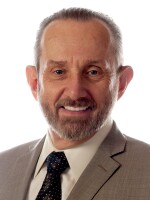
Welcome to Straight Talk on Health. I’m your host Dr. Chet Zelasko. Straight Talk on Health is a joint production with WGVU in Grand Rapids MI. I examine the practical application of health information. Nutrition. Exercise. Diet. Supplementation. I look at the science behind them, and let you know whether it’s something to consider or not. You can check out other things that I do on my website Drchet.com and sign up for my free emails.
I recently heard a physician and researcher make a statement in a podcast that stunned me. “Obesity is a disease for which the only cure is medication. There is no other way for people to lose and maintain weight loss. Why not? There is no way to change a person’s fat set point and thus they will always gain back the weight they lost.” That’s a summary of what she said but say it she did. I strenuously oppose that position. I agree that the obesity issue we have is the result of the food industry and the sedentary environment we live in. But obesity is completely treatable by eating better, eating less, and moving more. For the most part, the reason is that we don’t give out bodies enough time to adapt to the changes losing weight puts on the body. Here we go.
Let’s begin with something serious that involves a broken bone or recovery from a joint replacement. After the bones are aligned, the first phase of the recovery is reducing the inflammation and pain to restore joint mobility. That involves multiple systems of the body working together; hormones are certainly involved as well as the muscular, skeletal, cardiovascular, and other systems as well.
The repair process swings into action to heal the bones, muscles, ligaments, tendons, and other tissues involved. Bones take time to heal because all bones start as cartilage, which is then calcified; that takes six weeks and sometimes longer. At the same time, the muscular system has to repair muscles that might have been damaged in the process or are being asked to do other tasks than they had to before. I could continue, but my point is that the repair process is an adaptation process and takes time, often months and maybe even longer to restore full function. Can we use adaptation in a positive way? Yes.
I can’t think of a better example of positive adaptation than exercise. Whether it’s a sport skill, increasing strength, or improving cardiovascular fitness, exercise uses the adaptation principles. The difference is that it’s an intentional act instead of a response to a physical challenge. Let’s use walking or running to improve the fitness of your heart and cardiovascular system as well every other system involved—which is just about every other system we have.
Here’s how your CV system would respond to beginning a walking or jogging program. The first walk with a purpose—not like window shopping and less than stopping to catch your breath every minute—every system in your body is going “What the heck is going on here? I’m not used to this” Your heart is faster than normal and staying there. The blood is moving faster. 5,000 genes are suddenly activated when you start to exercise to bring every system online to deal with the stress. Your muscles, ligaments, tendons, stress hormones, nervous system that controls how the muscles respond to new movement. It’s a mess but you manage to get through it.
Depending on how hard you pushed yourself, you may feel it. Maybe fatigue a few hours later. Sore muscles. Things like that. That’s why you begin slowly. But by the third walk, your body will start to adapt. Your heart rate might not get as high during the third walk. By the 10th walk, you most likely will be able to maintain a faster pace but your heart rate may not be going as high as the first walk you took that was a slower pace. You’re adapting. Rather, every system in your body is adapting to the new stress. It will take less effort to do the same work. Exercise is a positive utilization of the adapting ability of your body. You just have to approach it in a systematic way to improve your CV health.
The key point is that whether intentional or as the result of challenges like joint replacement, the body’s adaptation to repair and growth takes time. Let’s turn to adaptation related to weight loss and weight maintenance.
No matter how we choose to lose weight, we need to eat better, eat less, and move more. Those three things have to be included to lose and maintain weight loss. What is also true is that no matter how you do it, it’s going to take time. No one went to bed at 150 lbs. and woke up at 300 lbs. The reverse is also true; to lose 30, 50, or the 150 lbs. in my example, it’s going to take time to lose the weight.
Can people lose weight? No question about it. Whether through a specific diet or using the current medications, people can lose weight. What they are not good at is keeping it off, from the early studies 75 years ago or the ongoing ones right now. I believe the problem is that many people believe that when they reach their goal weight, they’re done. That’s not true. That’s when making weight loss permanent really begins: the adaptation phase.
I’ve always taught people to adopt a diet you can maintain for the rest of your life as you’re losing weight. The reason is that’s pretty much how you’re going to have to eat for the rest of your life to maintain weight loss. You have an advantage; it’s going to take time to lose the weight so you can experiment on any type of diet or eating plan along the way. The same holds true for your fitness plan as using those calories does help.
If you use a GLP-1 RA, the same approach still holds true. Your body is being exogenously induced to release a hormone that slows down stomach emptying thereby eventually letting you know you’re full. The problem is ignoring those signals leads to vomiting, bloating, and diarrhea. The actual GLP-1 hormone works more subtly and our task is to get to the point that we listen to the endogenous signals again. Based on the very limited research so far, here is the best way to do that, followed by my best estimate of the time it takes to get to actual maintenance.
The first step is to learn the Mediterranean Diet or a version based on your ethnic background and shift your diet to that, while controlling the amounts you eat. Because the focus is on higher fiber foods like beans, grains, and vegetables, it’s easy to eat less because you’ll feel full sooner.
Second, research shows that fiber can be critical is promoting satiety by stimulating GLP-1. As you transition to a new diet, you can use fiber supplements to try to get to 25-30 grams or more of fiber every day. You may be also battling the loss of muscle at the same time, so maintain or increase your protein intake. There are plenty of great plant-based source of protein as well but meat is certainly on the table as well.
Finally, try to reduce ultra-processed foods to a minimum. They are deconstructed and reconstituted to provide simple carbohydrates, excess fats from oils, and preservatives and shelf-life extenders that are not necessary to any body functions. That’s it.
The Timeline. There is no research to suggest how long you have to pay attention before your body completely adapts to your new weight. Think about it. Every system has to adapt from the digestive system processing food, the microbiome to adapt to foods and process them, the endocrine system to produce the correct hormones, and on and on and on. That’s going to take time.
I haven’t found research that gives a precise timeline but I can give you my observation from interviews with people who have lost significant amounts of weight and maintained it. The timeline seems to be 18 to 24 months from the time they achived their goal weight. At that point, their body seems to have adapted to natural cues again.
I just can’t see relying on medications for doing something we can do ourselves. We have to consciously overcome the temptation of a hostile environment of food the food industry created. But if you think about, everything we need foodwise is also available. We have to train our brains to seek the best and leave the rest. It doesn’t mean we have to eat twigs and berries. It just means we have to pay attention. Medication or food. Your body. Your choice.
That’s all the time I have for this episode. If you like this podcast, please hit the share button and tell your friends and colleagues about it. Until next time, this is Dr. Chet Zelasko saying health is a choice. Choose wisely today and every day.
Reference:
1. Adv Nutri. May 2026. https://doi.org/10.1016/j.advnut.2026.100647
2. Nutr. 2026 Apr;156(4):101436.doi: 10.1016/j.tjnut.2026.101436.