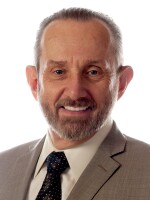
Welcome to Straight Talk on Health. I’m your host Dr. Chet Zelasko. Straight Talk on Health is a joint production with WGVU in Grand Rapids MI. I examine the practical application of health information. Nutrition. Exercise. Diet. Supplementation. I look at the science behind them and let you know whether it’s something to consider or not. You can check out other things that I do on my website Drchet.com and sign up for my free emails.
Let’s begin with an exciting piece of news. In reflecting on what we’ve learned over the past years, there is one weight loss myth that has been busted. You may have heard, over the past few decades, that experts and gurus have said that “It’s not about the calories!” They claim that weight loss is more complicated than that. They have blamed junk food and renamed it ultra-processed food, sugar intake, seed oils, and a whole host of other things from environmental to psychological but it’s not about the calories. It's not your fault.
No more. Think about it. One thing that the increased use of GLP-1 receptor agonists has clearly demonstrated is that when people use the medication: they eat less. The biochemistry allows the body to do what the body is supposed to do when we’ve eaten just enough calories: it makes us feel full. The stomach slows down emptying food and decreases our appetite allowing us to feel full. That’s supposed to happen naturally but we’ve allowed our body to ignore it and thus, we’ve eaten way more calories than we’ve needed. But at the end of the day, taking the medication forces us to eat fewer calories or suffer the consequences. What does that mean?
Weight loss always was, still is, and will always be about the calories. The myth is busted. The challenge is how to allow our body to recognize those naturally occurring signals without using medication. Not saying it’s easy but it can be done.Again, this myth is busted.
Paula is going to have her shoulder replaced soon. Her right shoulder and arm have been giving her problems for decades and now, it’s time to get it done. There are no amount of treatments or supplements that can help the torn muscles and the arthritis in the joint. The interesting thing is that she is going to have a reverse shoulder replacement performed. What’s that? Let’s talk about the RC muscles first.
My father-in-law went through the torn rotator cuff surgery. Twice. He tore the right set when he was starting a lawn mower. He went through surgery and then rehab. Just about back to normal and he fell out of the shower reaching for a towel. Fell on his left shoulder and you guessed it—he tore the left set of RC muscles. That’s how I know what it’s like because it happened to someone in my own home.
I thought it might be time to talk about the rotator cuff set of muscles. What are they? Where are they? What do they do? And why does it hurt so bad when you tear them.
Unless you’re driving right now, let your arm hang from your side, whether standing or sitting. Then, bend your elbow to 90 degrees with your palms up. Now, while keeping your elbow pinned to your side, rotate your arm away from your body. If you did it right, your forearm and hand should be perpendicular to your torso. Now, rotate your arm back and keep going until your hand touches your abdomen. The muscles that perform those movements are called the rotator cuff muscles. When you moved your forearm away from the body, that’s called external rotation. Toward your belly would be internal rotation. No matter where your arm is, from above your head all the way to when it’s at your side, when the upper arm bone called the humerus, rotates inward or outward, it’s the rotator cuff muscles that do it. They do get some help from other muscles of course but they are the major movers.
When you throw a ball? Internal rotators do that. When you pull away from your body by using your arm instead of your whole upper body as in starting a lawn mower? External rotation. There will not be a test but the names of those muscles are the supraspinatus, the infraspinatus, the teres minor and the subscapularis. Collectively, they are the muscles of the rotator cuff.
The rotator cuff muscles are unique in one respect. They originate on a bone that floats for the most part. The scapula is that bone that resides on your upper back, one on each side. It does attach to the clavicle on the one end but not directly to the ribs. That doesn’t mean it’s not rigidly held in place but it’s more dependent on the posterior muscles of the back to remain stable. On the other hand, this arrangement allows for greater movement.
The rotator cuff attaches to the upper bone of the arm called the humerus. As I said earlier, it’s responsible for rotating the arm inward and outward. This isn’t an anatomy lesson but it would help if you can visualize that the reason it can do that movement is because the muscles start on the front and back of the scapula. You might think it would be muscles on the front of the shoulder that causes the internal rotation but while the pectorals can stabilize the joint, the major movers are on the scapula. When I taught kinesiology, that was the most difficult concept for students to grasp.
The rotator cuff muscles also stabilize the shoulder. That means they can help keep the head of the humerus in the shallow socket of the shoulder. These muscles are prone to injury because we use our shoulders a lot. They can be stretched and torn. Sometime physical therapy can help but if one or more of the muscles are torn as in Paula’s case, it needs to be surgically repaired.
Now, throw in significant arthritis in the shoulder joint and you get the idea why the shoulder needs to be replaced. The rotator cuff muscles were torn so long ago, there is nothing to attach any more. She’s trained her deltoid to take up some of the work the RC should be doing.
Which brings us to the reverse shoulder replacement. If the RC are intact, they replace the head of the humerus and the cup of the scapula. Once replaced, the arm can function just like it used to. But if there are no RC to speak of, then they replace the head with the cup of the scapula attached to the replacement. That allows the deltoid to pick up the slack for the missing RC. It does come with limitations such as putting your arm behind your back but it will relieve the pain and it will allow her to lift her arm to brush her hair and put on make-up. The pain is the important thing of course, but we all want to look good.
This isn’t a lesson in surgical techniques. I’ve already told you how to identify rotator cuff problems at rest – you can’t sleep in bed very well. There are some physical tests and orthopedist can perform but usually, it requires an MRI of the shoulder to know for sure. The most important part of the surgery is the rehabilitation. If you do not work to get the full range of motion and strength back in the arm, you will still be lame.
Let me bring back my father-in-law. After he had surgery on the right rotator cuff, he rehabbed the shoulder completely. He gained back full range of motion and was able to lift his arm completely over his head. But with the left, he either lost interest or thought “good enough is” and didn’t quite get back the ROM--even up to the time he died over 14 years later. If you have the surgery, do the rehab! You can be sure Paula will.
I recently did a rant on why nutrition can’t fix everything. The completion of that thought is that we are blessed to have researchers and physicians who work on solutions, be they surgical or pharmaceutical, to help us fill the gaps with techniques and procedures that work.
That’s all the time I have for this episode. If you like this podcast, please hit the share button and tell your friends and colleagues about it. Until next time, this is Dr. Chet Zelasko saying health is a choice. Choose wisely today and every day.