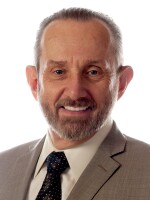
Welcome to Straight Talk on Health. I’m your host Dr. Chet Zelasko. Straight Talk on Health is a joint production with WGVU in Grand Rapids MI. I examine the practical application of health information. Nutrition. Exercise. Diet. Supplementation. I look at the science behind them, and let you know whether it’s something to consider or not. You can check out other things that I do on my website Drchet.com and sign up for my free emails.
As this is National Heart Month, I felt it was time to review BE FAST. What’s that? It is the acronym used to determine whether you or someone you’re with may be having a stroke. To make it more real, I’ll share what happened to me when I thought I might be having a stroke. I’m more sensitive to it as my dad died when I was 17 from a heart attack and my maternal grandparents both had strokes. Here’s my story.
The day began normally. I work for a few hours. Paula gets up and we eat breakfast together while watching something that we recorded on the DVR. On this particular day, they were showing promos in the lower left hand corner of the screen for what is coming up next. No matter what I did, I could not focus my eye to read what it said. It was blurry.
The show finished and I went back to work. I wanted to check on a local news story online. When I found the story, it was all a blur. Instead of letters, it looked like zeros and ones or something like that. This caught my attention and I decided to check out a few things. Looked in the mirror. No changes. Smiled. No drooping. Held my arms out to the side. Steady as a rock. Those are the self-tests for a stroke. More later. So I decided to go back to work.
I was recording an audio that morning. I was reading from a script and it was all going along just fine. Until I got to the last sentence. No matter how many times I repeated it, it made absolutely no sense. I've been the health expert that has said for over 30 years “when in doubt, check it out”. So I told Paula what was going on and said I thought it was best that we go to the emergency room. I didn't feel dizzy, I didn't feel faint, I wasn't confused, but still that vision thing bothered me. I'll let you know what happened later.
Let’s get to stroke. What is a stroke? A functional definition of a stroke is a lack of blood flow to the brain. It can be temporary like a Transient Ischemic Attack or TIA is a short obstruction of blood flow to the brain that often resolves itself without damage. My father-in-law had several TIAs that were checked out completely.
On the other hand, both of my maternal grandparents had what might be called small strokes. In each case, the stroke impacted both the same way: the eye on one side of their face drooped and their speech was slurred. This was over 50 years ago and they did not have the treatments that they had today. My grandfather ended up dying of a stroke at 73 years while my grandmother lived to 80 and died of congestive heart failure. With the medications that were available today, they both might have lived longer without the recurring strokes. If you don't think that we have better treatments today than we did then, you haven't lived long enough to see the manifestations of stroke before treatments existed.
There are basically two types of strokes. An obstructive or ischemic stroke is the lack of blood flow to the brain caused by a blood clot or other form of blockage. A hemorrhagic stroke is one that's caused by the breaking of blood vessels. Whether the symptoms of a stroke are minor and temporary or severe with the possibility of being permanent, relies on how much of the brain is impacted by the lack of blood flow.
It is important, make that critical, that we do everything that we can to reduce the impact of a stroke. The way we do that is to recognize when strokes are occurring and getting medical attention as quickly as possible. That’s where BE FAST comes in.
The signs and symptoms of a stroke were updated by a couple of years ago. The Society of NeuroInterventional Physicians added a couple of signs and symptoms to the four that were promoted by the American Heart Association. Let’s begin with those.
The original acronym was FAST. The F stands for face drooping. Does one side seem lower than the other? You can also have the person smile, a really, really big smile to see if they are smiling equally on both sides of their face or does one side just not make it.
The A stands for arm weakness. Typically, you would have someone stand with their arms raised to 90 degrees away from their body and parallel to the ground. You can visually check to see if one arm does not quite make it to parallel with the ground.
The S stands for speech difficulty. You can think of a phrase and have someone repeat it as best they can. That's sort of what freaked me out a little bit when I tried to read the script and the sentence made no sense. I was going to tell you this later but I might as well tell you right now: no one could have made sense out of that sentence. It was so poorly written that no matter how I or anyone tried to say it, it made no sense. I wrote that well before the blurred vision showed up. What it meant was I should have edited my script a little closer.
The T in FAST stands for time to call 911. Do you call if you just have one sign or symptom? Yes! Do you still call if these symptoms seem to resolve themselves? Yes! So why did I have Paula take me to the emergency room? We had the time, the situation had resolved itself, and mostly, I didn't feel it was necessary to use healthcare resources under the conditions I was in. There may have been other people who actually were having strokes that might not have gotten care quite as quickly.
So what did the brain surgeons add to the mix? They added the acronym BE which then makes the entire acronym BE FAST. What do the new letters stand for? Ironically the B stands for loss of balance. E stands for eyesight. Loss of eyesight or, pay attention, blurry eyesight. That's exactly what originally happened to me. I think adding balance and eyesight are a good idea for the lay public. A physician or other health care professional may be completely aware that they are looking for balance and eyesight symptoms but maybe not as obvious to you and I. Here’s a review of the acronym BE FAST once more.
B – Balance - is the person suddenly having trouble with balance or coordination?
E – Eyes - is the person experiencing suddenly blurred or double vision or a sudden loss of vision in one or both eyes without pain?
F - Face Drooping - does one side of the face droop or is it numb? Ask the person to smile.
A- Arm Weakness - is one arm weak or numb? Ask the person to raise both arms. Does one arm drift downward?
S - Speech Difficulty - is speech slurred, are they unable to speak, or are they hard to understand? Ask the person to repeat a simple sentence like, “The sky is blue.” Is the sentence repeated correctly?
T - Time to call 911 - If the person shows any of these symptoms, even if the symptoms go away, call 911 and get them to the hospital immediately
Finishing up the story about my trip to the emergency room, they tested everything that they could think of. They did it a cat scan. Didn't find any cats. There were no signs that there was any damage in my brain. They did echocardiograms of my carotid arteries as well as my heart. They didn't find any blockages. They did do a great deal of blood work. Nothing outstanding there either. Fortunately, with the health insurance that I had, I could be put under observation without being formally admitted to the hospital. So they continued to monitor me and evaluate me with every kind of physical, mental, vision and other tests with no evidence that I had a stroke. But if a ever suspect it in myself or others, you know I’m going to BE FAST to assess it.
That’s all the time I have for this episode. If you like this podcast, please hit the share button and tell your friends and colleagues about it. Until next time, this is Dr. Chet Zelasko saying health is a choice. Choose wisely today and every day.